

In 2023, Peru recorded 41,710 adolescent births. That’s 5 per hour. Among girls under 14, all recorded births resulted from sexual violence. The crisis is most acute in rural areas, the Amazon and among girls with no education.
This story needs to be told. But it's not an easy one to design. How do you handle the emotional weight of it while staying credible? And how do you make the same data speak to different audiences—politicians who need to see the scale of the crisis, private sector leaders who respond to economic arguments, and journalists who need a compelling human angle?
We’ve been working with UNFPA Peru since December to do just that: we built a webpage with interactive charts, followed by a two-month digital campaign. Here's how we approached it.
The multi-layered narrative
First, we set the structure. A simple storyline wouldn’t have worked because the audiences are too different. A policymaker and a journalist don’t need the same argument to care.
So we built the piece in layers. The opening chapter explains the inequalities. The second dives into sexual violence and maternal mortality. The third presents an economic argument: every dollar invested in preventing adolescent pregnancy generates up to $40 in estimated returns. And the whole piece ends with a call to action tailored to each specific audience.
The result is a story that doesn’t ask everyone to enter through the same door. You find the chapter that speaks to you, and the data meets you there.
The personal story
But even with a layered narrative, scale is hard to feel. 41,710 is an important number, but it’s also an abstract one. That’s why we introduced the story of Maribel.
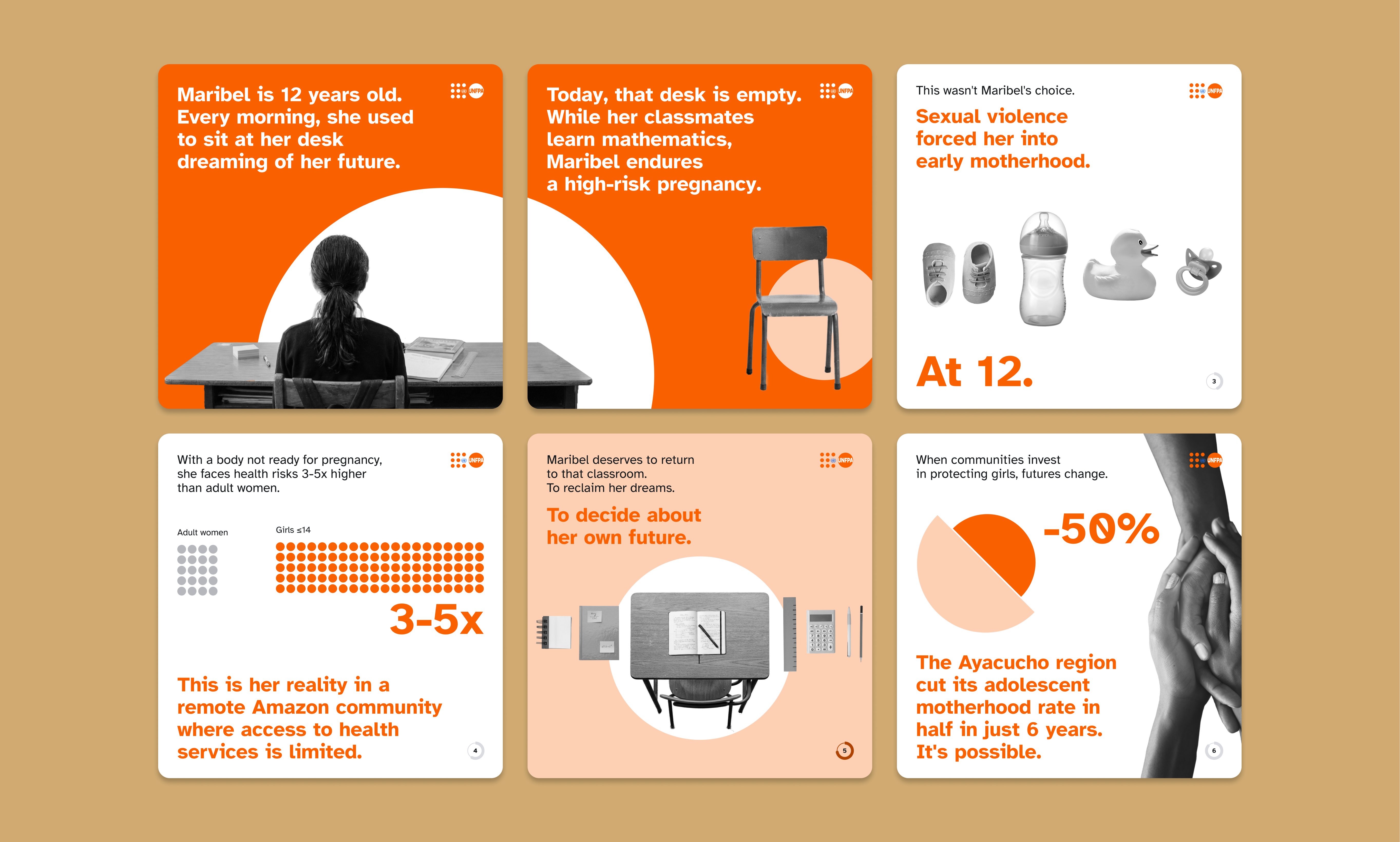
Maribel is 12 years old. Every morning, she used to sit at her desk dreaming of her future. Today, that desk is empty. While her classmates learn mathematics, Maribel endures a high-risk pregnancy.
This wasn’t Maribel’s choice. Sexual violence forced her into early motherhood. At 12. With a body not ready for pregnancy, she faces health risks 3-5x higher than adult women.
This is her reality in a remote Amazon community where access to health services is limited. Maribel deserves to return to that classroom. To reclaim her dreams. To decide about her own future.
When communities invest in protecting girls, futures change.
We opened the piece with her story and used it across the digital campaign. One girl, one name, one desk. If we can help Maribel, we can help all the other girls. That’s the logic of a personal story in data work: it doesn’t replace the numbers, it makes them harder to look away from.
The balanced visual style
Storytelling was only part of the job. The rest was bringing it to life visually.
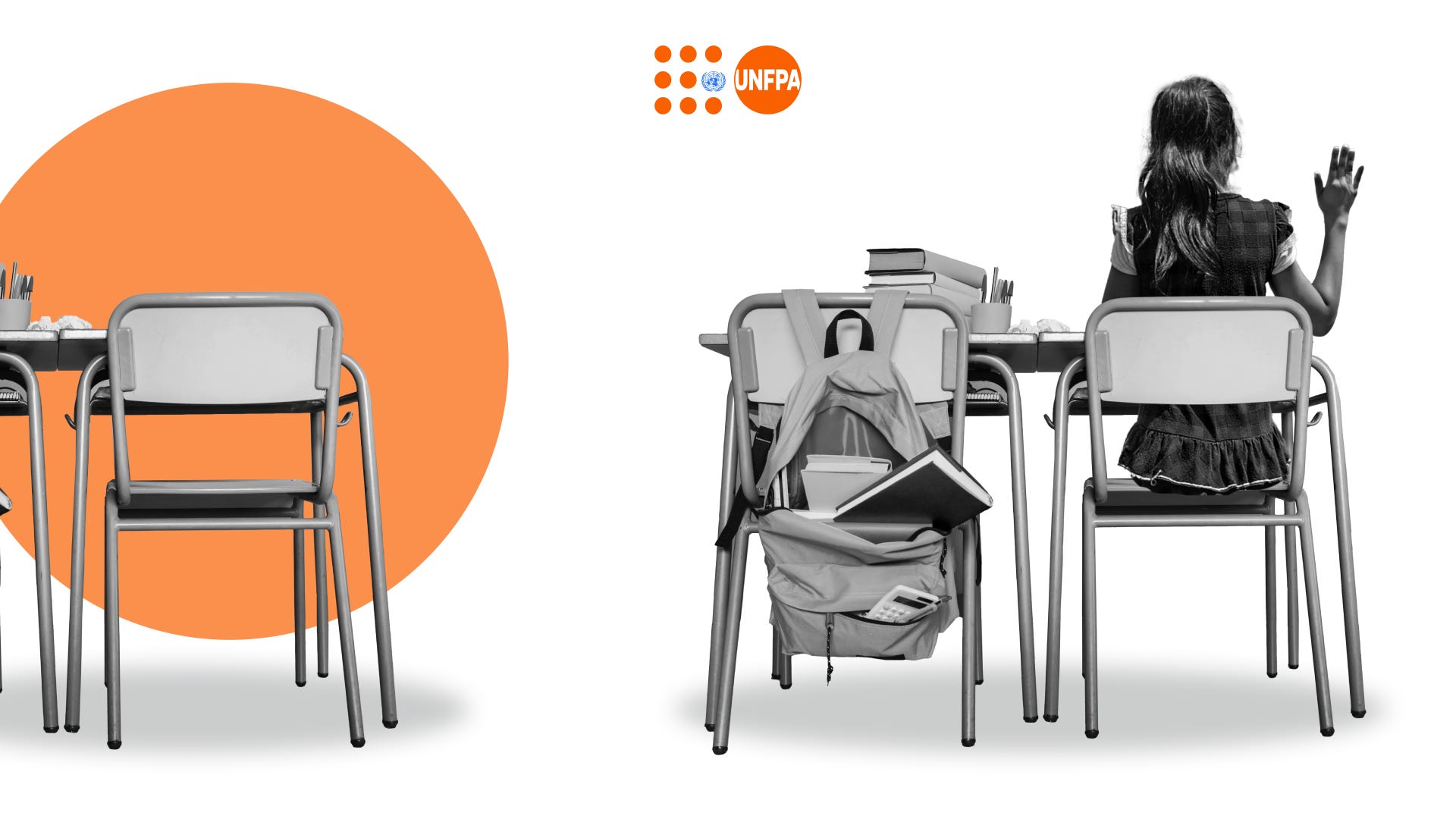
We explored two creative directions: illustration and collage. Illustrations are more traditional and approachable. But collage felt bolder—it’s still underused in the INGO space, which means it cuts through. So we went with collage, with a few deliberate choices to keep it balanced and respectful.
We showed girls as whole people, never reducing them to a body part (eg: pregnancy bump). The collage elements are all black and white for impact, paired with UNFPA’s orange in monochrome. And we reserved the collage style for covers, chapter openers, and social media, keeping the data visualisations clean and unadorned. The charts needed to feel serious and credible on their own.
The result stood out: something UNFPA hadn’t done before, in a visual language that felt fresh on social feeds where we’ve kind of seen it all.

Bringing it together
Last month I wrote about why emotion matters in data design. This project is what that looks like in practice. The personal story makes you care, the layered narrative gives every audience a reason to act and the visual style holds the tension between impact and respect.
If you’re working on a campaign that feels heavy, start with this question: what do you want your audience to feel, and what do you need them to understand?
Thanks for reading!
See you next month,
—Evelina
I'd like to have some mentoring. How can I start with data viz available for public en general ,related to our surrounded reality concerns?
Yes , mainly a path for starting projects. I had taken introductory courses though not sure which tool (R or Tableau I need to learn) and for society dynamics researches , specially in the women matters; one of my dreams is to find truth data sources, then plan for impacting data visualizations and make them available to public audiences in our strees, wall/murals , to provide visibility to common people that is not looking at the internet 😁 thanks for your follow up!!! Appreaciate any suggestion based in your experience.